best things to do in bayonne
Best Things to Do in Bayonne, France

Best Things to Do in Bayonne, France

Bayonne is one of the most characterful cities in the French Basque Country. Sitting where the Nive and Adour rivers meet, the city combines colourful Basque architecture, medieval streets, impressive churches, lively markets and a particularly strong food culture.

1. Explore Grand Bayonne

Grand Bayonne is the historic heart of the city and the best place to begin exploring. Wander through narrow pedestrian streets lined with tall traditional buildings, independent shops, cafés and restaurants. Rue d’Espagne and the streets surrounding the cathedral are particularly enjoyable. Look upwards as you walk: many buildings have colourful shutters, timber details and wrought-iron balconies. It is an atmospheric introduction to Bayonne and easy to explore without following a particular route.

2. Visit Bayonne Cathedral

The Cathédrale Sainte-Marie de Bayonne dominates the old town with its two soaring Gothic spires. Construction began in the Middle Ages, and the cathedral is now part of the UNESCO-listed Routes of Santiago de Compostela in France. Step inside to admire the vaulted interior, stained glass and chapels before visiting the adjoining cloister. The peaceful Gothic cloister provides a striking contrast to the busy streets surrounding the cathedral and is one of Bayonne’s architectural highlights.

3. Walk Along the River Nive

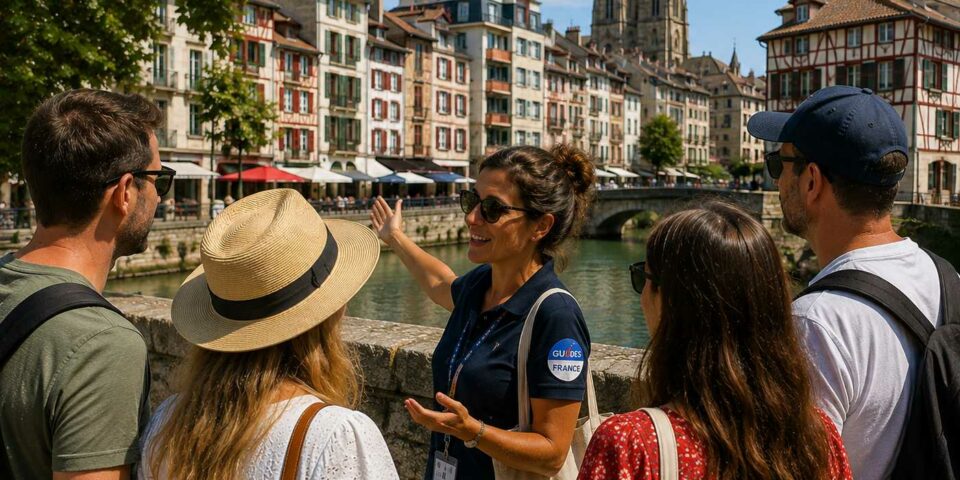
Some of Bayonne’s prettiest views can be found beside the River Nive. Colourful buildings rise directly behind the quays, while cafés and restaurants occupy many of the ground floors. Walking beside the river also provides excellent views towards the bridges connecting Grand Bayonne with Petit Bayonne. Visit during the morning for a quieter atmosphere or return in the evening when restaurant terraces fill and the waterfront becomes one of the liveliest parts of the city.

4. Discover Petit Bayonne

Cross the River Nive and explore Petit Bayonne, another historic neighbourhood with a slightly younger and more relaxed atmosphere. Its narrow streets contain bars, restaurants and cultural attractions alongside traditional Basque buildings. The district becomes particularly lively in the evenings, but daytime visitors will find plenty to explore too. Petit Bayonne is also home to the Musée Basque, making it an easy addition to a walking tour through the historic centre.

5. Visit the Musée Basque et de l’Histoire de Bayonne

Anyone wanting to understand the culture of the French Basque Country should visit the Musée Basque et de l’Histoire de Bayonne. Located in the historic Maison Dagourette beside the Nive, its collections explore Basque traditions, everyday life, crafts, language, maritime history and regional identity. Displays include traditional clothing, furniture, agricultural objects and artworks. It provides useful context for many of the customs, architecture and foods visitors encounter while travelling around Bayonne and the surrounding Basque Country.


6. Explore Les Halles de Bayonne

Les Halles is Bayonne’s central covered market and an excellent place to experience local food culture. Inside you’ll find stalls selling meat, fish, cheeses, charcuterie, vegetables and other regional products. The surrounding streets become particularly animated on market mornings, when additional traders set up beside the river. Pick up ingredients for a picnic, browse Basque specialities or simply enjoy the atmosphere. Saturday morning is especially popular and can be considerably busier than weekdays.

7. Taste Bayonne Ham

Bayonne gives its name to one of southwest France’s best-known specialities: Jambon de Bayonne. This delicately salted and cured ham appears on menus throughout the city and is often served simply with bread or as part of a charcuterie platter. Several specialist shops sell whole hams and sliced portions to take away. Trying it in Bayonne itself is worthwhile, particularly alongside other Basque products such as sheep’s-milk cheese and Espelette pepper.

8. Discover Bayonne's Chocolate Tradition

Bayonne has an unexpectedly important place in French chocolate history. Jewish chocolate makers who settled in the area during the 16th and 17th centuries helped establish the city’s chocolate-making tradition, which continues today. Several chocolatiers have shops around the historic centre, making a chocolate-tasting walk an easy addition to sightseeing. Look for dark chocolate, ganaches and creations flavoured with local ingredients. Chocolate is also one of the best edible souvenirs to bring home from Bayonne.

9. See Château-Vieux

Beside the cathedral stands the imposing Château-Vieux, or Old Castle, whose origins stretch back many centuries. The fortress was altered repeatedly as Bayonne’s military importance grew, particularly during the medieval and early modern periods. The castle itself is not normally a conventional tourist attraction open for wandering around, but its massive stone walls remain an important part of Bayonne’s historic landscape. Combine a look at the exterior with the nearby cathedral and surrounding ramparts.

10. Explore Nearby Biarritz and Anglet

Bayonne makes an excellent base for exploring the surrounding coast. Biarritz is only a short journey away and offers the Grande Plage, Rocher de la Vierge, lighthouse and famous surfing culture. Anglet lies between Bayonne and Biarritz and has a long succession of Atlantic beaches. Combining Bayonne’s historic streets and food culture with the beaches of the nearby coast gives visitors two very different experiences without requiring a long journey.

Leave a Reply

Your email address will not be published. Required fields are marked *

X