the medoc wine route
A Guide to the Médoc Wine Route

A Guide to the Médoc Wine Route

Stretching north from Bordeaux along the Left Bank of the Gironde Estuary, the Médoc Wine Route (Route des Châteaux) is one of France’s most scenic and prestigious wine trails. Winding through endless vineyards, picturesque villages and magnificent château estates, the route offers visitors an unforgettable journey into the heart of Bordeaux’s world-famous wine country.

Whether you’re a passionate wine enthusiast or simply looking to experience one of France’s most beautiful countryside regions, the Médoc Wine Route combines spectacular scenery, rich history and exceptional wines into a memorable day trip from Bordeaux.

What is the Médoc Wine Route?

The Médoc Wine Route follows the D2 road, often referred to as the Route des Châteaux because of the extraordinary number of prestigious wine estates lining the route. Over approximately 80 kilometres, visitors travel through some of the world’s most famous wine appellations, including Margaux, Saint-Julien, Pauillac and Saint-Estèphe.

The journey passes hundreds of vineyards and elegant château estates, many dating back hundreds of years. Behind their impressive gates lie wineries responsible for producing some of the most sought-after wines on the planet.

Unlike many wine regions, the Médoc offers an almost continuous landscape of vineyards, making every kilometre of the drive a pleasure.

Discover the Famous Wine Villages

Each village along the route has its own character and winemaking identity.

Margaux is renowned for producing some of Bordeaux’s most elegant and fragrant wines. Visitors are immediately struck by the beauty of the surrounding vineyards and the magnificent architecture of Château Margaux, one of the world’s most iconic wine estates.

Further north lies Saint-Julien, a small appellation known for its remarkable concentration of prestigious classified growths. Here, historic estates sit among perfectly maintained vineyards, creating one of the most picturesque sections of the route.

Pauillac is often considered the capital of the Médoc. Home to three of Bordeaux’s five First Growth estates—Château Lafite Rothschild, Château Latour and Château Mouton Rothschild—it attracts wine lovers from around the globe. The town itself offers restaurants, cafés and beautiful views across the Gironde Estuary.

The northernmost major appellation is Saint-Estèphe, where gravel soils produce powerful, structured wines renowned for their excellent ageing potential. The peaceful countryside and quieter atmosphere make it an enjoyable final stop along the route.
Visit Prestigious Wine Châteaux

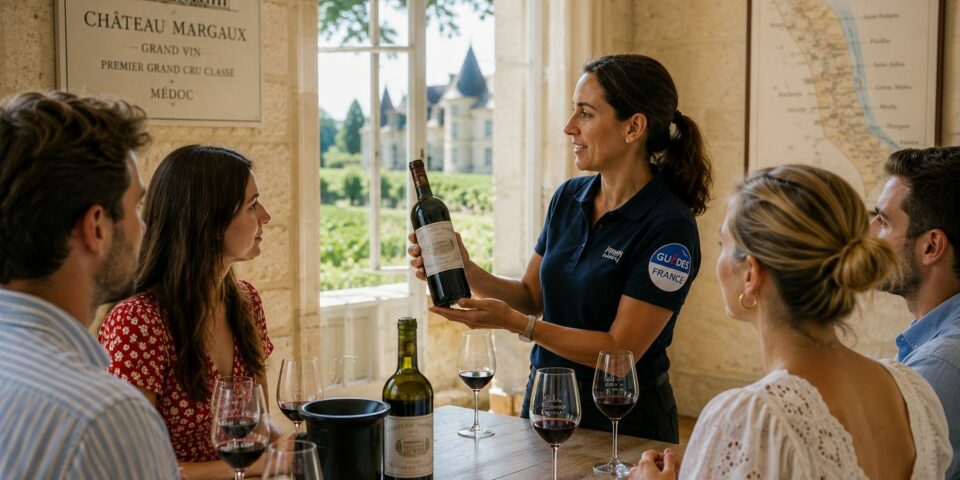
One of the highlights of the Médoc Wine Route is visiting its legendary wine estates. Many châteaux offer guided tours where visitors can explore the vineyards, discover traditional winemaking techniques and walk through impressive barrel cellars before enjoying carefully guided wine tastings.

Some estates showcase centuries of history and classical architecture, while others feature modern wineries equipped with the latest technology. Every visit provides a different perspective on Bordeaux’s rich winemaking heritage.

As many of the most prestigious estates require reservations, booking ahead is highly recommended.

Enjoy the Beautiful Countryside

While wine is undoubtedly the main attraction, the Médoc’s natural beauty is equally impressive. Rolling vineyards stretch towards the horizon, interrupted only by elegant manor houses, ancient churches and quiet villages.

The nearby Gironde Estuary adds another dimension to the landscape, with scenic viewpoints and peaceful riverside roads offering opportunities for photography and leisurely walks. During spring and summer, the lush green vineyards create postcard-perfect scenery, while autumn transforms the countryside into shades of gold, amber and crimson during the grape harvest.


Why Explore with a Private Guide?

Although the route is straightforward to drive, visiting with a private guide greatly enhances the experience. Your guide can arrange château appointments, recommend wineries suited to your interests and explain the differences between the various appellations, grape varieties and classifications.

Rather than worrying about navigation or organising tastings, you can relax and enjoy the scenery while benefiting from local knowledge and insider recommendations. A private guide can also introduce you to smaller family-run estates and hidden gems that many visitors would never find independently.

Leave a Reply

Your email address will not be published. Required fields are marked *

X